Roof measurement
Area, pitch, ridges, hips, valleys, and eaves measured from aerials, plans, or your field measurements — converted to squares with the right waste factor for the roof's complexity.
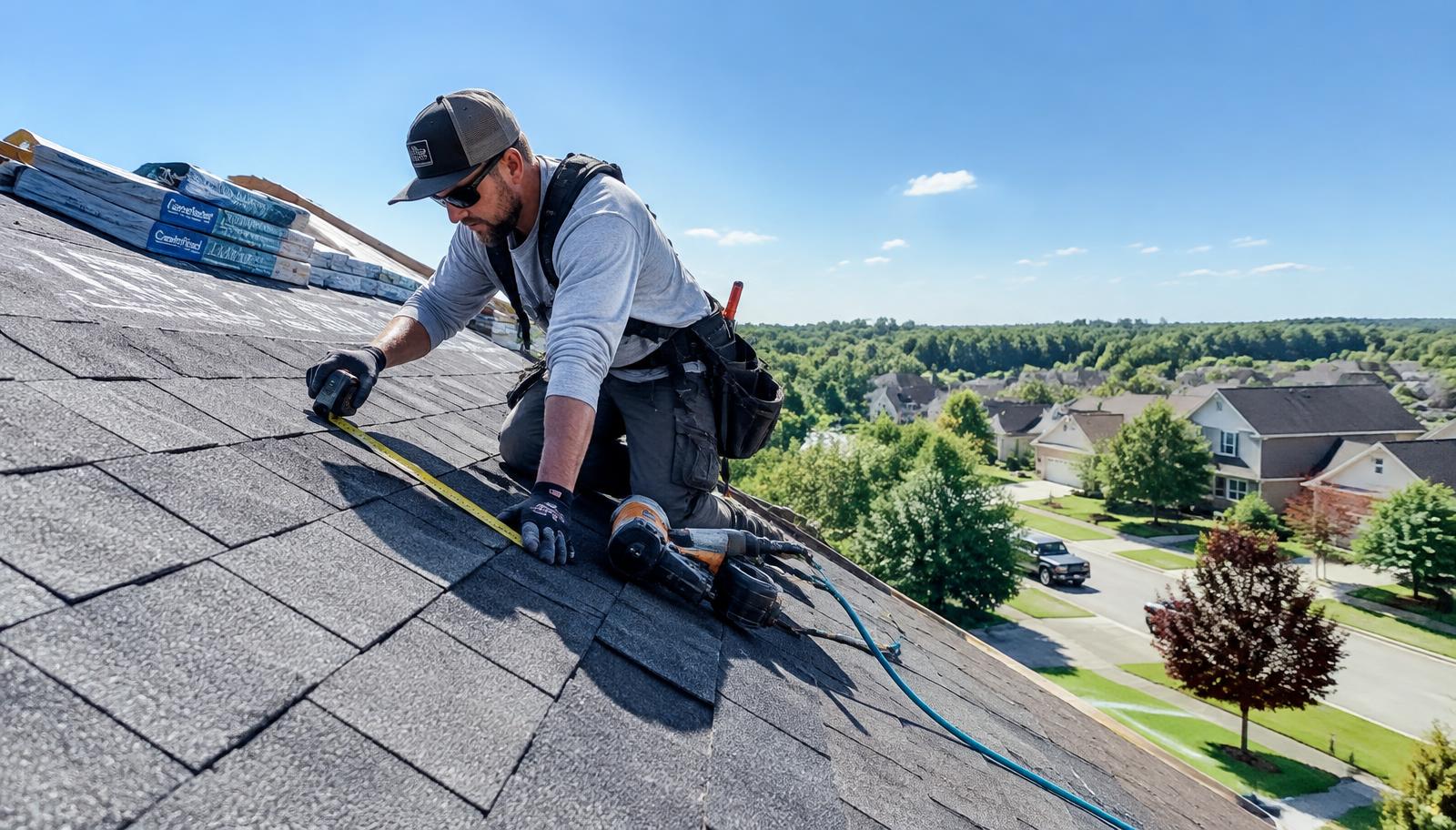
Homeowners call three roofers and hire the one who quotes first. Your Buildbid agent turns measurements and photos into a complete estimate — tear-off, shingles, underlayment, flashing, and labor — priced your way, in minutes.
Quantities come from the roof measurements and photos. Prices come from your material and labor rates. Nothing is estimated from a per-square guess.
Area, pitch, ridges, hips, valleys, and eaves measured from aerials, plans, or your field measurements — converted to squares with the right waste factor for the roof's complexity.
Existing layers counted and priced for removal, with dumpster and disposal fees based on the real weight of what's coming off.
Shingles, metal panels, tile, or membrane counted by square with waste adjusted for hips, valleys, and dormers — not a flat 10% on everything.
Felt or synthetic underlayment, ice and water shield at eaves and valleys, and starter strip measured to code and manufacturer spec.
Step flashing, counter flashing, pipe boots, drip edge, ridge vent, and box vents counted per penetration and per linear foot — the items most estimates forget.
Allowances for damaged decking priced per sheet, so rot discovered at tear-off doesn't eat your margin.
Labor applied per square and adjusted for pitch, stories, and access — steep and high roofs cost more, and the estimate says so.
Permit fees, manufacturer warranty upgrades, and inspection costs carried as visible line items, not buried overhead.
Every bundle, roll, and flashing with quantities and where on the roof it goes.
Your material costs, labor rates, and margin applied line by line, so the number that goes out is the number you meant.
Measurements in, estimate out — while the homeowner is still comparing roofers, not next week.
Your name, address, phone number, and logo on every estimate, formatted the way your customers expect.
And the summary: a bid you can defend line by line, out the door before the addendum deadline.
Four assumptions that decide whether a roofing estimate makes money. Your agent makes each one explicit, priced, and visible before the quote goes out.
A flat 10% waste undercharges cut-up roofs with hips and valleys and overcharges simple gables — and both cost you work or margin.
Pipe boots, step flashing, and ridge vent are small dollars per piece but real money across a whole roof — and the most common items left off.
A 12/12 two-story takes far longer per square than a walkable ranch. If labor doesn't adjust for pitch and access, the hard jobs lose money.
Rotten decking discovered at tear-off is the classic margin killer. Carry a per-sheet price in writing so the conversation is already had.
Tell us how your company prices roofs — your material rates, labor per square, waste factors, and crews. We train a custom AI agent on your way of estimating.
Upload aerial measurements, plans, or your field notes and photos. Your agent reads them and builds a detailed roofing takeoff.
Review the estimate, tweak what you want, and get a branded quote to the homeowner the same day — before the other roofers call back.
Roofing bids are won on speed and lost on missed details. Here is the process experienced roofing estimators follow, from measurement to a priced, branded quote.
Get area, pitch, ridges, hips, valleys, and eaves from aerial measurement reports, plans, or your own field measurements. Convert to squares and note every penetration.
Count existing layers, price removal labor, and carry dumpster and disposal fees based on real weight — shingles are heavy, and disposal surprises eat margin.
Count shingles, metal, tile, or membrane by square. Adjust waste for complexity: simple gables need little, cut-up roofs with hips and valleys need much more.
Measure underlayment and ice barrier, then count step flashing, pipe boots, drip edge, and ridge vent per penetration and per foot. These small items are the most commonly forgotten.
Price labor per square, then adjust for pitch, stories, and site access. Steep and high roofs take longer, and the estimate should reflect it.
Price damaged decking per sheet and list permit and warranty costs as visible line items, so surprises at tear-off are already agreed.
Measure the roof in squares, price tear-off, materials with waste, underlayment, flashing, and ventilation, then apply labor adjusted for pitch and access, plus overhead and margin.
Flashing and ventilation items, waste factors that ignore roof complexity, and labor that doesn't adjust for steep pitches and difficult access.
BuildbidAI builds a custom AI agent that does these steps on your plans, at your rates, so every roofing bid goes out faster and more consistent.
Read the full roofing estimating guide →Send us a roof measurement report and how your company prices jobs today. We'll show you the estimate a custom Buildbid agent comes back with.