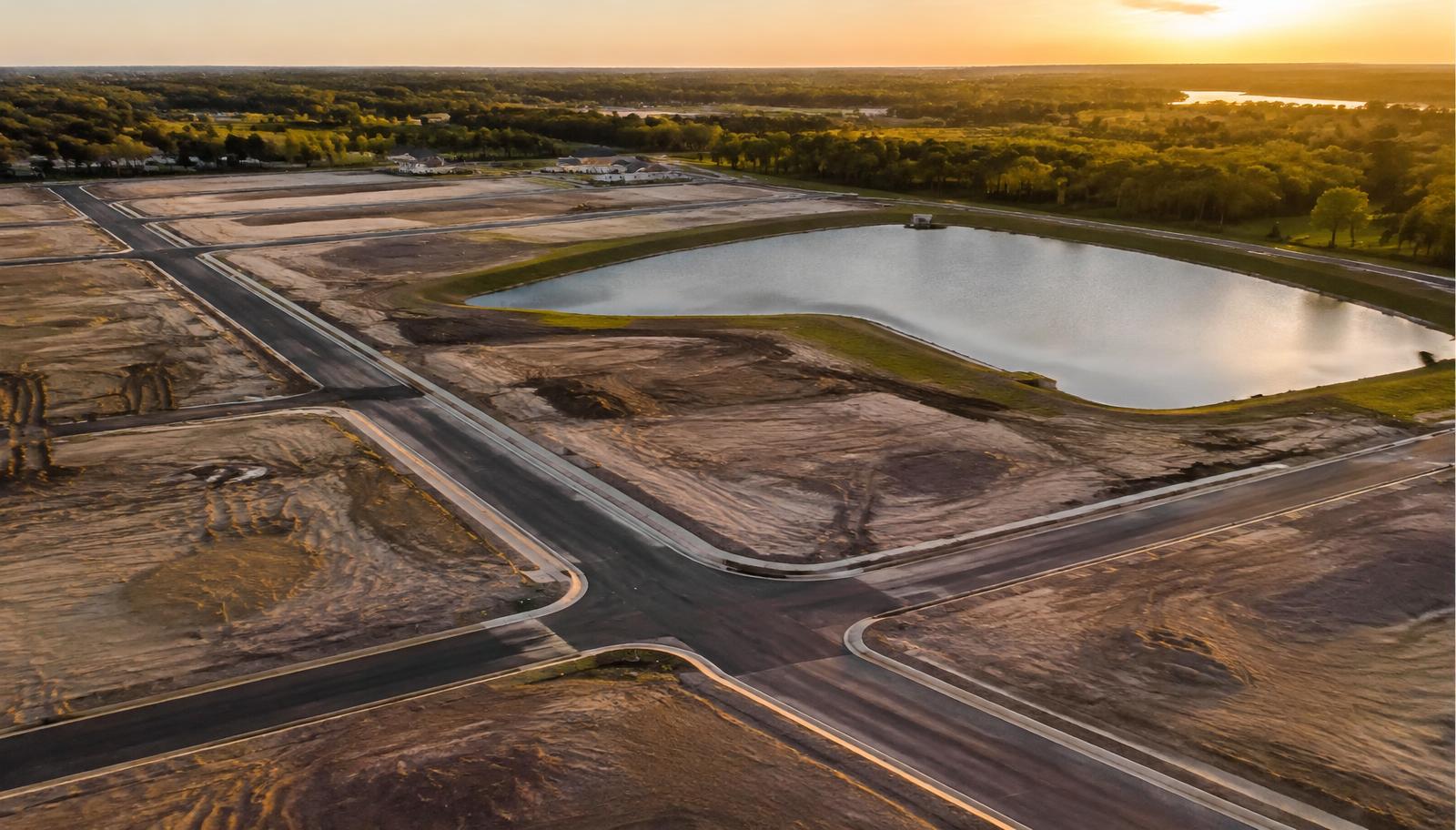
Clearing & mass grading
Clearing, stripping, and cut/fill volumes computed from existing and proposed surfaces, with topsoil respread and lot grading separated.
Your Buildbid agent reads the civil plans, profiles, and specs, then returns grading, utilities, paving, and stormwater — priced at your rates, in minutes.
Quantities come off your civil plans and profiles. Costs come from your book. Nothing is filled in from a per-lot average.
Clearing, stripping, and cut/fill volumes computed from existing and proposed surfaces, with topsoil respread and lot grading separated.
Main, service, and manhole quantities by size, material, and depth band from the plan and profile sheets — with fittings and valves counted.
Pipe, structures, headwalls, and detention ponds measured from the drainage plan, with outlet control and pond excavation priced separately.
Subgrade, base, asphalt or concrete paving, and curb and gutter quantified by typical section and station.
Joint trench, conduit, street lights, and transformer pads scoped so the dry utility coordination shows up in the number.
Silt fence, inlet protection, construction entrances, and stabilization measured by phase, with inspection and maintenance carried.
Sidewalks, ramps, landscaping, entry features, and amenity areas itemized, so the final lots and common areas are fully priced.
Work broken into phases with equipment and crew production rates you set, so a multi-year buildout is priced as it will be built.
Every pipe, structure, and section with units, stations, and the sheet it came from.
Cut, fill, and import/export by phase, so the dirt is moved once.
Production by activity and phase, so the schedule and the number agree.
Material, equipment, and sub rates you set — applied the same way on every bid.
And the summary: a bid you can defend line by line, out the door before the addendum deadline.
Four assumptions that decide whether a site bid makes margin. Your agent makes each one explicit, priced, and visible before you submit.
Deep sewer runs priced at an average depth mean more trench, more shoring, and more backfill than the bid carried.
A site that balances on paper but not by phase turns into import and export you didn't price.
Inspections, testing, and utility tie-in fees from the city or district show up after the award.
Every time the crew leaves and comes back costs money. Phased work has to be priced as phased work.
Tell us how you price site work — your crews, equipment rates, production, material sources, and markups. We train a custom AI agent on your way of bidding.
Upload the civil plans, profiles, geotech report, and specs. Your agent reads them and builds a detailed site takeoff.
Review quantities, the earthwork balance, and a complete line-item estimate in a fraction of the usual time — then tweak, approve, and send the bid.
Site and land development estimates cover grading, utilities, paving, and stormwater across a large area. Here is the step-by-step process for bidding site work.
Price clearing, stripping, and mass grading from the civil grading plan, including cut and fill balance and haul.
Measure sanitary sewer, storm, and water lines by size and depth, and count manholes, inlets, hydrants, and valves.
Coordinate electric, gas, and telecom conduit and trenching with the utility companies — and confirm which parts are in your scope.
Measure detention ponds, underground systems, outlet structures, and erosion control for the length of the project.
Measure base, asphalt or concrete paving, curb and gutter, and sidewalks by area and length, plus striping and signage.
Large developments are built in phases. Price remobilization, testing, bonds, and permit fees for each phase you're bidding.
It varies widely by region, density, and utilities. A reliable per-lot number comes from a full site takeoff divided across lots — not a regional average.
Off-site utility extensions, rock in utility trenches, and erosion control maintenance over a long schedule.
Buildbid.ai builds a custom AI agent that does these steps on your plans, at your rates, so every land development bid goes out faster and more consistent.
Read the full land development estimating guide →Send us a set of civil plans and how you price site work today. We'll show you the takeoff and the number a custom Buildbid agent comes back with.