Ductwork & air distribution
Rectangular, round, and flex duct quantified by size, gauge, and insulation class off the mechanical plans — with fittings, dampers, and turning vanes counted, not averaged.
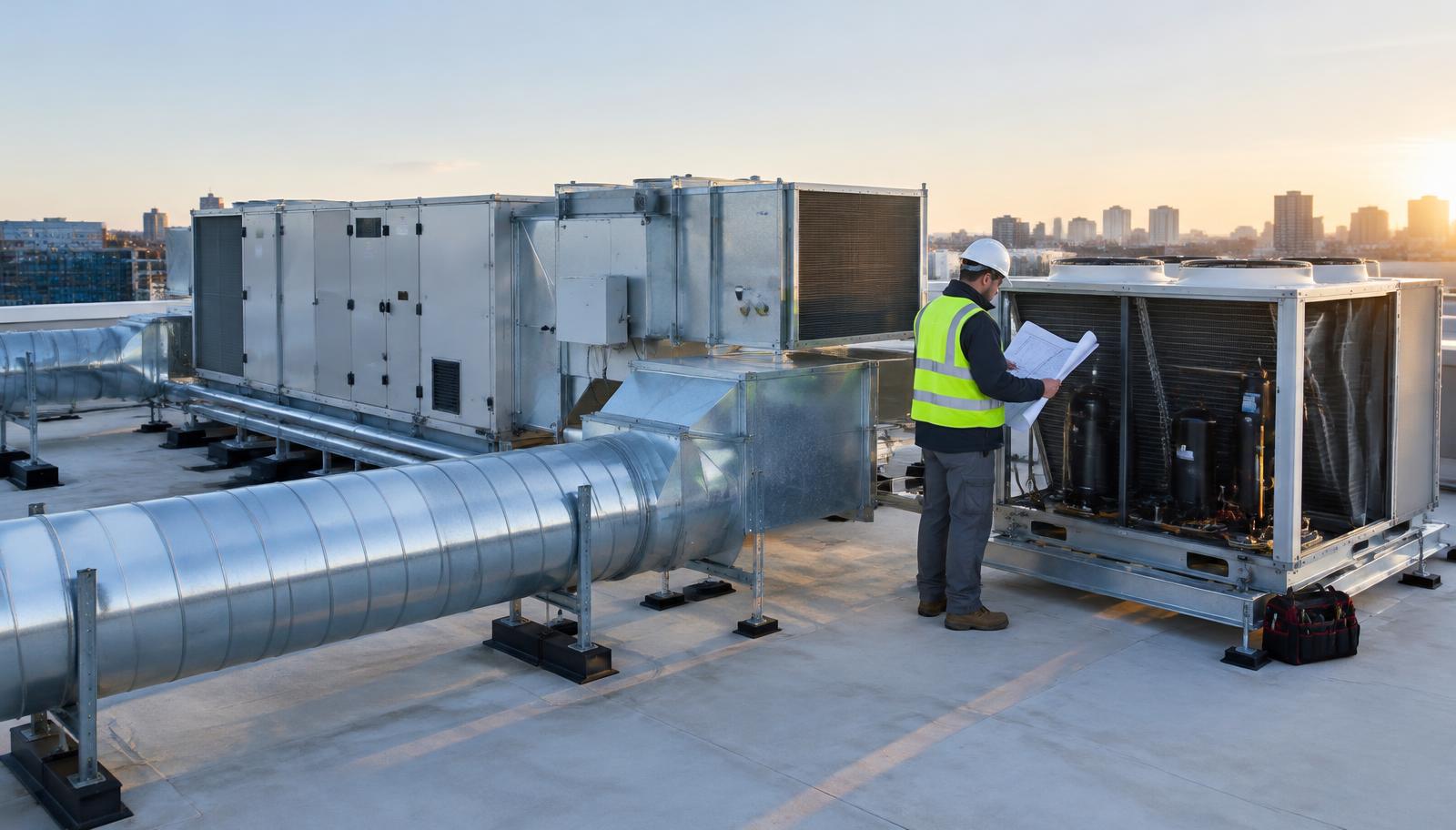
Your Buildbid agent reads the mechanical drawings, equipment schedules, and specs, then returns ductwork, piping, and equipment — priced at your rates, in minutes.
Quantities come off your drawings and specs. Costs come from your book. Nothing is filled in from a per-ton average.
Rectangular, round, and flex duct quantified by size, gauge, and insulation class off the mechanical plans — with fittings, dampers, and turning vanes counted, not averaged.
RTUs, AHUs, chillers, boilers, VRF systems, and split systems matched to the schedule line by line, priced at your vendor quotes and lead times.
Tonnage and capacity checks against the load calcs, so undersized or oversized equipment gets caught at estimate time — not at commissioning.
Chilled water, heating water, refrigerant, and condensate piping by material and diameter, with insulation, valves, and accessories itemized separately.
VAV boxes, diffusers, grilles, registers, and exhaust fans counted per floor and per zone, tied back to the airflow schedule they serve.
Thermostats, sensors, actuators, and BAS points scoped from the controls drawings and sequences, so the controls allowance stops being a guess.
Sheet metal, piping, and startup hours modeled at your crew's production rates — not a national average that flattens your margin.
TAB, duct leakage testing, and commissioning support surfaced as line items you decide on, instead of scope that shows up after the award.
Every duct, pipe, and equipment item with units, locations, and the drawing it came from.
Schedule quantities against your vendor quotes, so substitutions and lead times are visible before you commit.
Hours per system and per floor, so you can check the schedule against the number.
Material, equipment, and sub rates you set — applied the same way on every bid.
And the summary: a bid you can defend line by line, out the door before the addendum deadline.
Four assumptions that decide whether a mechanical bid makes margin. Your agent makes each one explicit, priced, and visible before you submit.
A pounds-per-square-foot rule either gives away sheet metal on a simple job or loses the bid on a complex one.
An alternate unit with different weights, curbs, or electrical needs changes three other trades' scope — and your number.
Sequences in the specs that never made it into the estimate come back as a change order you eat.
Balancing and testing are in Division 23. They should be in the price, not absorbed as overhead.
Tell us how you price mechanical work — your duct assemblies, labor units, vendor discounts, and markups. We train a custom AI agent on your way of bidding.
Upload the mechanical drawings, equipment schedules, and specs. Your agent reads them and builds a detailed HVAC takeoff.
Review quantities, labor hours, and a complete line-item estimate in a fraction of the usual time — then tweak, approve, and send the bid.
Bidding HVAC jobs well means pricing ductwork, equipment, and labor from the drawings — not from rules of thumb. Here is a practical process for mechanical contractors.
List every RTU, AHU, split system, fan, and terminal unit with tonnage, CFM, and options. Equipment is often the largest single cost, so get vendor quotes early.
Measure duct by run and size, convert to pounds by gauge, and count fittings separately. Fittings and transitions carry far more labor than straight duct.
Diffusers, grilles, registers, dampers, and flex connections come straight off the plans. Match each to the air device schedule.
Measure refrigerant, condensate, and hydronic piping by size and material, then add insulation, hangers, and valves.
Turn every quantity into hours with your labor units — hanging duct, setting equipment, piping, and startup — then adjust for height and access.
Controls, test-and-balance, and commissioning are frequently subcontracted or forgotten. Carry a number or a clear exclusion for each.
Price per ton is a useful sanity check, but bids should be built from the takeoff. Two jobs with the same tonnage can have very different duct and piping scope.
Duct fittings, equipment substitutions with different connections, and controls scope that grows after the award.
Buildbid.ai builds a custom AI agent that does these steps on your plans, at your rates, so every HVAC bid goes out faster and more consistent.
Read the full HVAC estimating guide →Send us a set of mechanical drawings and how you price ductwork today. We'll show you the takeoff and the number a custom Buildbid agent comes back with.