Mass grading & stripping
Cut, fill, and topsoil-removal volumes pulled from your grading plan at the design slopes you specified — not a lump-sum guess off the section view.
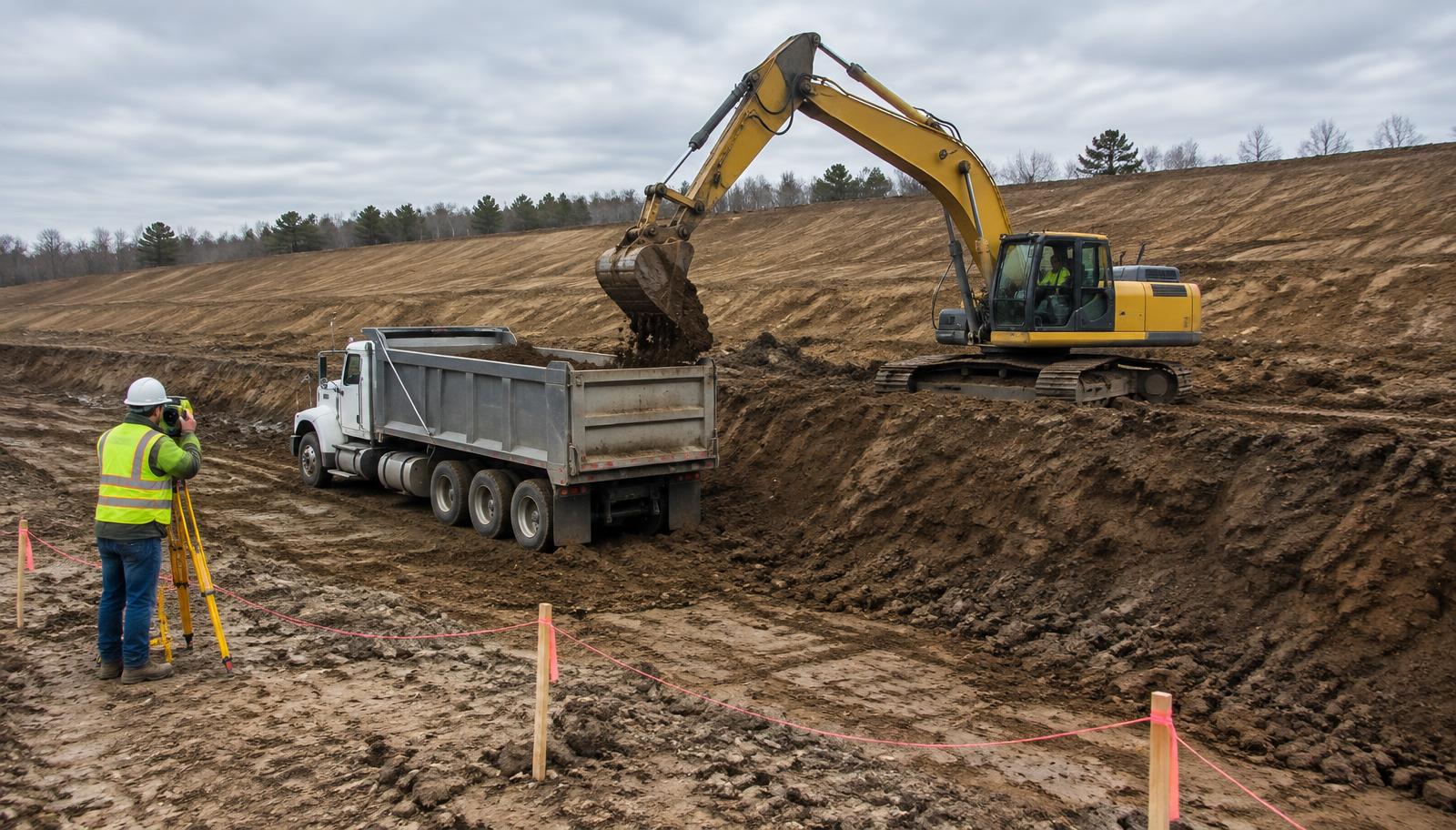
Your Buildbid agent reads the grading plan, borings, and specs, then returns cut/fill volumes, haul, and equipment hours — priced at your rates, in minutes.
Quantities come off your drawings and specs. Costs come from your book. Nothing is filled in from a per-square-foot average.
Cut, fill, and topsoil-removal volumes pulled from your grading plan at the design slopes you specified — not a lump-sum guess off the section view.
Truck counts, cycle times, and dump-site fees for every spoil volume, with swell and shrink applied so the dirt leaving site matches the dirt you pay to place.
Where the borings meet the design line, rock is priced at your ripping, breaking, or hammer rates — separated out so it never hides inside a soil number.
Depth-by-width quantities for storm, sanitary, water, and conduit, with bedding classes, select fill, and pavement restoration itemized separately.
A cut/fill balance sheet that shows what you're borrowing, what you're wasting, and where the money moves when the finish grade shifts a foot.
Silt fence, wattles, inlet protection, seeding, trench boxes, and plate shoring quantified off the plan and the specs, so temporary work stops falling out of the bid.
Dozer, excavator, scraper, and water truck output modeled at your production rates — not a textbook average that flatters the schedule and starves the margin.
Wellpoints, sump pumping, and soil-disposal or contamination allowances surfaced as line items you decide on, instead of surprises in a change order.
Every earthwork item with units, locations, and the drawing it came from.
Import and export quantities before you commit to a haul contract.
Hours per activity, so you can check the schedule against the number.
Material, haul, fuel, and sub rates you set — applied the same way on every bid.
And the summary: a bid you can defend line by line, out the door before the walk-through ends.
Four assumptions that decide whether an earthwork bid makes margin. Your agent makes each one explicit, priced, and visible before you submit.
A route one mile shorter than the real one is a truck cycle you never charged for, repeated on every load.
Bank, loose, and compacted measure are three different quantities of dirt. Only one of them gets paid.
A rule-of-thumb allowance either gives away margin on easy ground or loses the bid on hard ground.
Shoring, dewatering, and erosion control are in the specs. They should be in the price.
Tell us how you price earthwork — your assemblies, soil factors, haul rates, and markups. We train a custom AI agent on your way of bidding.
Upload the grading plan, profiles, borings, and specs. Your agent reads them and builds a detailed earthwork takeoff.
Review quantities, equipment hours, and a complete line-item estimate in a fraction of the usual time — then tweak, approve, and send the bid.
Send us a grading plan and how you price haul today. We'll show you the takeoff and the number a custom Buildbid agent comes back with.
Talk to us